Industrial Data Analysis

Industrial Data Collection: How Can You Obtain Reliable and Actionable Data?

Share

Key Takeaways

  • Industrial data collection involves gathering signals generated by equipment at a site (measurements, status, commands) for analysis.
  • Useful data is judged based on three criteria : its nature, the level at which it is collected, and its integrity.
  • Cross-reference measurement data and control data allows you to verify that a command sent has indeed produced the expected result in the field.
  • The data transmitted by the PLC is filtered according to its programming. Capturing data directly from the inputs/outputs provides access to the raw signal, independent of the control system.

In industry, equipment constantly generates data: temperature, pressure, flow rate, speed, equipment status, power consumption, commands sent to a machine… All of this information can help manufacturers better understand how their facilities operate.

The collection of this data has thus become a key element in the digital transformation of industrial sites. But simply collecting data is not enough. It is also necessary to collect the right data, in the right place, and with a sufficient level of reliability to be able to truly put it to use.

Why collect data from industrial equipment?

Data collection provides insight into what is actually happening at an industrial facility. By tracking information from equipment and processes over time, teams have objective metrics to analyze their operations and quickly quickly identify any deviations.

Industry Data Collection

This data can serve several purposes:

  • Monitor industrial performance. The collected data makes it possible to develop KPIs tailored to each facility: uptime, cycle frequency, changes in a measurement, equipment behavior, or deviations from expected operation. This data provides production teams with a clear picture of their industrial performance challenges.
  • Optimize energy consumption. Measuring and monitoring equipment performance also helps identify instances of excessive energy consumption and better understand their causes. Energy monitoring can thus help target optimization efforts and measure their effects over time.
  • Maintenance Data Collection Anticipate maintenance needs. An unusual change in an engine’s fuel consumption, temperature, pressure, or other parameter may be a sign of gradual deterioration. Analyzing the data can then help detect certain deviations before they lead to a failure and an unplanned shutdown.
  • Powering digital transformation applications. Field data is, after all, the raw material for many Industry 4.0 projects, from monitoring tools to digital twin models.
  • Strengthening OT Cybersecurity. The collection and analysis of OT data—particularly control signals from equipment—enables the detection of abnormal behavior or deviations from expected operation. This provides an additional level of visibility for identifying suspicious actions or tampered commands that could affect industrial processes, a key challenge in industrial cyberresilience.

There are, therefore, many potential uses for industrial data. But their relevance depends directly on the data available. No matter how powerful an analytics system may be, it can draw meaningful conclusions only from reliable information to which it has actually has access to.

That is why the first question in an industrial data collection project should not simply be “What do we want to do with our data?”, but also “What data do we actually have access to, and what data do we actually need?”

What data should be collected in the manufacturing industry?

Temperature, pressure, flow rate, consumption, engine status, valve opening or closing: the choice of data to collect obviously depends on the industrial process you wish to monitor and the objectives being pursued. This industrial data acquisition covers everything from production data as well as data related to equipment condition.

But beyond the nature of the data, we must ask ourselves at what stage of the industrial process it is collected.

The Importance of Cross-Referencing Measurement Data and Control Data

To fully understand how a system works, two main categories of data are of interest:

  • Measurement data provide information on the actual status of a process or piece of equipment: temperature, pressure, flow rate, speed, level, electrical current, the position of a part, etc.
  • The control data correspond to the instructions sent to the equipment: start or stop a motor, open or close a valve, activate a relay, turn on an indicator light, etc.

Having access to these two types of information allows for a deeper understanding of how a facility operates. For example, it becomes possible to correlate a command sent with the reaction actually observed on-site.

If a command requires a piece of equipment to be activated, the collected data can be used to verify that the expected action was indeed carried out. Conversely, a discrepancy between the command and the observed behavior may indicate an anomaly, whether it is due to a technical malfunction, an error, or a malicious act.

Why is it better to collect data at the source?

Industrial Data Collection at the Source To properly analyze how industrial equipment operates, the source of the field data is just as important as its nature.

Data collected as close as possible to the sensors, actuators, and pre-actuators provides direct access to the raw electrical signals generated by the system’s operation, before they are processed by control systems, if at all.

In particular, this approach provides real-time information that is independent of the PLC and reflects what is actually happening at the equipment level. It is particularly valuable when comparing a control command with its actual effect, identifying deviations, or verifying the operational integrity of a process.

Collecting data at the source thus provides additional information to ensure the reliability of an analysis of an industrial facility. (To learn more, read the article: “OT Cybersecurity: There Is an Urgent Need to Secure Industrial Systems at the Source”).

In this context, cyberattacks no longer seek merely to cause a abrupt halt to production. The most sophisticated scenarios now aim to:

  • Modify industrial controls;
  • Falsifying monitoring data;
  • Hide process deviations;
  • Disable or bypass certain alarms;
  • Misleading operators about the actual condition of the equipment.

The challenge, then, lies not only in detecting the intrusion, but in the ability to distinguish reliable information from compromised information.

What are the limitations of industrial data collection methods?

Manufacturers have several ways to retrieve data from their facilities: programmable , supervisory control systems, Historian, IoT sensors. Each method addresses a specific need and has its limitations.

Method

Accessible data

Raw or processed signal

Access to Order Data

Service Call for Installation

Programmable Logic Controller (PLC)

Variables Defined in the Program

Processed and filtered by the automaton logic

Yes

Program Modification for Any New Data

SCADA Monitoring

Variables reported by the PLCs

Processed, sampled

Partial

Configuration to be updated

Historian

History of Monitored Variables

Aggregated and sampled

No

None, but it depends on the upstream situation

IoT Sensors Added

Only the values measured by the installed sensors

Gross, within a limited scope

No

Adding hardware, power supply, calibration, connectivity

Capture on Inputs/Outputs

Measurement and control signals already present in the system

Raw, independent of the PLC

Yes

Non-intrusive, with no changes to the program

Data is available but is sometimes incomplete or has been processed

Programmable logic controllers collect a great deal of information to control industrial processes. However, not all data generated by the equipment is necessarily transmitted or accessible : the information used is primarily that which was intended for the system’s operation.

Accessing new data therefore requires modifying the PLC’s programming or the existing architecture, subject to validation and production shutdown constraints that this entails.

Another point: the data transmitted to monitoring or analysis systems has often already been processed. It no longer corresponds to the raw signals observable at the equipment level. ( To learn more about the importance of field data integrity, read Frédéric Breussin’s op-ed on the subject).

Adding new sensors: more data, more complexity
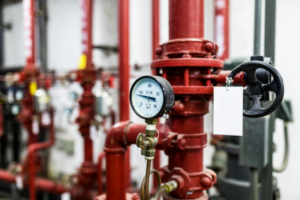
Industrial Data Collection Sensor Another option is to add industrial IoT sensors specifically designed for the data you want to monitor.

This approach enriches the available information, but involves adding new equipment to the facility, with all the complexity that this may entail: selecting and installing sensors, power supply, calibration, cloud connectivity, and integrating the data into the existing system.

Nor does it necessarily provide access to all relevant information. Control signals, for example, provide particularly valuable data for understanding the actions actually required of the equipment, but are not necessarily captured by adding measurement sensors.

The challenge, then, is to find a method that allows us toaccess more data without increasing the amount of equipment or adding complexity to the existing infrastructure.
How can we simplify and improve the reliability of data collection at an existing facility?

To access more data without disrupting the existing architecture, the challenge is to be able to easily deploy new data collection points as close as possible to the equipment.

Several features can make this process easier.

Prioritize plug-and-play and non-intrusive solutions

In an existing industrial environment, every change made to a facility can result in deployment challenges. A “plug-and-play” minimizes the steps required to access data and reduces installation and configuration time.

The non-intrusive approach should also be considered: the goal is to collect data without altering the operation of the industrial process or disrupt the existing equipment.

Ensure compatibility with heterogeneous equipment

An industrial site rarely consists entirely of identical equipment; for example, it may include machines from different generations, PLCs from various manufacturers, and different supervisory control systems that can operate side by side.

The data acquisition system must therefore be able to integrate into this environment without requiring the replacement of existing equipment. The Compatibility with various types of industrial signals and protocols facilitates the centralization of data and its transmission to the tools already in use by the company.

Collect data as close to the equipment as possible

Ease of deployment should not come at the at the expense of the quality of the information collected. As we have seen, direct access to signals from the equipment provides raw data, independent of any processing performed by the control systems.

Collection devices installed as close as possible to the entrances and exits make it possible to retrieve the measurement and control data already present in the system, without necessarily increasing the number of dedicated sensors.

Think about data utilization from the very beginning

In the industry, the challenge often lies in the amount of data to process. The challenge, therefore, is to be able to collect and analyze data in real time, and then to transmit the information that is truly useful: raw data when necessary, or aggregated data as needed.

This data must then be able to feed into various applications and tools, including: supervision, industrial monitoring, energy monitoring, maintenance, OT cybersecurity, and even digital twins. The interoperability of the data collection solution is therefore essential for transmitting data to existing systems and avoiding the creation of new silos.

Three Things to Check Before Launching a Fundraising Project

The collection of industrial data is not about accumulating ever more information. Before launching a project, three questions determine most technical decisions.

The level of data capture : Is the data you need available in raw form, or has it already been processed by the PLC? Control data : Do you have it, or are you limited to measurements? And data utilization : Will the data be fed into a tool that can make use of it?

With this in mind, AIoTrust has developed a plug-and-play, non-intrusive solution for collecting and analyzing industrial datathat accesses data directly at the equipment level. A single infrastructure leverages this data for performance monitoring, energy optimization, maintenance, digital transformation, and OT cybersecurity.

Industrial Data Analysis

FAQ – Industrial Data Collection

What is industrial data collection?

The industrial data collection involves acquiring the information generated by the machines, equipment, and processes at an industrial site so that it can be analyzed and utilized. This may include measurement data (temperature, pressure, flow rate, energy consumption, etc.), operational status data, or control data. This data acquisition can be used, in particular, for industrial monitoring, performance tracking, maintenance, or OT cybersecurity.

There are several methods for collect data from an industrial machine. Some information can be retrieved via the programmable logic controller (PLC) or existing supervisory systems. It is also possible to add dedicated industrial or IoT sensors, or to set up a data acquisition system capable of retrieving signals directly from the equipment.

Acquisition solutions plug-and-play and non-intrusive enable data collection from an existing system while minimizing changes to its architecture. Installed as close as possible to the equipment, they can utilize existing signals and avoid the need to add new sensors or modify PLC programming.

A programmable logic controller uses the information necessary for control the industrial process. The data accessible through it may therefore have been selected or processed before being transmitted to other systems.

In contrast, collection at the source involves capturing the raw signals as close as possible to the sensors, actuators, and pre-actuators. This allows for obtaining information independent of the processing performed by the PLC and, in particular, provides access to measurement and control data generated by the actual operation of the system, with a higher sampling rate than that of the PLC.

Read our latest news and blog posts

OT cybersecurity and digital transformation: expertise, trends and news from the field.